
Wings and sauces
Bonchon Wings Calories and Sauce Guide
Compare Bonchon wings by piece count, size, sauce or heat option, and full nutrition panel so a wings order is matched to the right source-backed row.
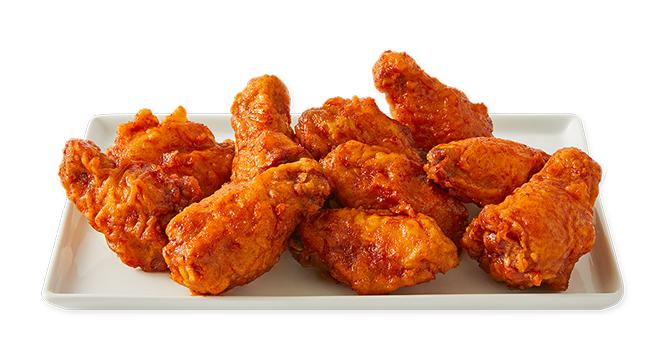 Wings Guide
Guide overview
Bonchon wings need exact matching, not one generic wings estimate
Bonchon wings are one of the most common reasons visitors use a calorie calculator, but they are also one of the easiest items to misread. The word wings is not enough. You need the serving size, piece count, and any sauce or heat option that appears in the nutrition row.
The calculator groups related wings rows so you can compare the exact variant. That lets you see how a size change or flavor choice affects calories and the rest of the panel before you add sides or shared starters.
How to use this page
Read the row, build the meal, then verify the source
The calculator is strongest when it is used as a comparison workflow. Browse the guide, open the relevant internal links, build exact rows in the calculator, and use official Bonchon pages for current restaurant-controlled details.
Each article in this guide set links back to related planning pages so visitors can move between calories, sodium, sides, protein, group orders, and source limits without losing the context of the full meal.
Serving size
Start with the piece count before comparing calories
A wings comparison starts with serving size. Calories only make sense after you know what the row measures.
If one row represents a smaller wings order and another row represents a larger wings order, the larger number is not automatically a worse choice. It may simply represent more pieces. Read the serving label first, then compare how the total changes when you choose a size or quantity.
This is especially important for shared orders. A large wings order may be split by several people, while a smaller order may be eaten by one person. The calculator can total the published order, but it cannot know how people will divide the food unless you use the result as a planning reference.
Build the exact row
Open the calculator and choose the wings serving that matches the order you are considering.
Browse chicken categories
Use the menu guide when you want to compare wings against drumsticks, strips, boneless chicken, or combo formats.
Sauce and heat
Treat each sauce or heat option as its own row when the source does
Bonchon chicken flavor is part of the order, and flavor can be part of the nutrition row. Do not assume every sauce has identical nutrition values.
When the source lists variants such as Soy Garlic, Spicy, Korean BBQ, Yangnyeom, or Classic Crunch, the calculator preserves that separation. Choose the exact flavor or heat option shown in the item controls. If a source row separates sauce variants, the safest comparison is to respect that separation.
Sauce can also affect fields beyond calories. Sodium, carbohydrates, and sugar are often worth checking when comparing sauced or seasoned items. A meal can look similar on calories but different in sodium or sugar once the full row is visible.
Read sodium with sauces
Sodium can be one of the biggest differences between similar-looking chicken orders.
Compare lower-calorie paths
If calories are the main planning field, compare size, sauce, sides, and quantity together.
Full panel
Use wings calories with sodium, carbs, fat, and protein
Wings comparisons are better when you read the full nutrition panel instead of stopping at calories.
Calories answer one question: how much energy is listed for the serving. Sodium, carbs, sugar, fat, saturated fat, cholesterol, and protein answer different questions. Fried chicken can be high in multiple fields at once, so a meaningful comparison should keep those fields visible together.
Protein can help when comparing chicken formats, but it does not erase other tradeoffs. A protein-forward order may still carry sodium or fat that matters for your planning. Use the calculator totals to see the complete panel before deciding which version fits your goal.
Protein and macro workflow
Use the macro guide to compare wings with strips, boneless chicken, bowls, and other menu items.
Nutrition source details
The nutrition guide explains how source rows become calculator totals.
Meal context
Add sides, drinks, starters, and dessert before judging the meal
A wings order rarely exists alone. The meal total can change when sides or shared starters are included.
Fries, seasoned fries, onion rings, rice, coleslaw, kimchi, pickled radish, edamame, and starter items all belong in the total when they are part of the planned order. Adding them separately helps show whether the wings row or the supporting items are doing most of the work in the final number.
For shared orders, decide whether you are looking at the table total or an individual estimate. The calculator can total the table, but the portion split is a human decision. Use the family meal guide when the goal is to compare a group order without pretending everyone eats the same amount.
Sides and starters
Read how supporting items change calories, sodium, carbs, sugar, and fat.
Family meal planning
Use group totals carefully when a wings order will be shared.
FAQ
Quick answers about this guide
Short answers for visitors using the calculator as a planning reference.
Are all Bonchon wings calories the same?
No. Published rows can vary by serving, piece count, size, sauce, or heat option. Use the exact calculator row for the variant you are comparing.
Should I compare wings by calories per piece?
The source rows are the safest unit to use. You can reason about sharing, but the calculator totals the published serving rather than inventing per-piece values beyond the source.
Source boundary
Independent guide with dated source references
This article is part of an independent Bonchon calorie calculator site. Nutrition values are planning references from the saved 2026-06 nutrition source and related menu snapshot. Verify current details through official Bonchon sources before ordering, especially for allergens, ingredients, sodium limits, medical diets, prices, and availability.