
Tteokbokki nutrition
Bonchon Tteokbokki Calories and Nutrition
Bonchon Tteokbokki is listed at 980 calories for the complete 30.4 oz source row. See how its 174g of carbohydrates, 32g of protein, 18g of fat, 2,780mg of sodium, and share size affect meal planning.
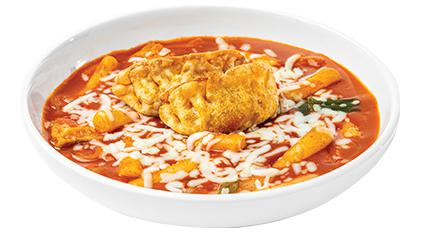 Tteokbokki Calories
Guide overview
Bonchon Tteokbokki has 980 calories in the complete 30.4 oz row
Bonchon Tteokbokki is listed at 980 calories in the June 2026 source-backed calculator data. The same 30.4 oz row contains 174g of carbohydrates, 32g of protein, 18g of fat, and 2,780mg of sodium. That is the direct answer to the calorie question, but the listed amount is large enough that serving context belongs beside the number.
Treat 980 calories as the complete published row rather than an automatic one-person serving. If the dish is shared, start with the full row and divide only by the portion each person expects to eat. The equal-share examples below are planning math, not separate official Bonchon serving sizes.
How to use this page
Read the row, build the meal, then verify the source
The calculator is strongest when it is used as a comparison workflow. Browse the guide, open the relevant internal links, build exact rows in the calculator, and use official Bonchon pages for current restaurant-controlled details.
Each article in this guide set links back to related planning pages so visitors can move between calories, sodium, sides, protein, group orders, and source limits without losing the context of the full meal.
Nutrition snapshot
Read the full Tteokbokki row before focusing on one number
The 980-calorie total is most useful when the rest of the published nutrition panel stays visible.
The complete Tteokbokki row lists 174g of carbohydrates, including 8g of dietary fiber and 29g of sugar. It also has 32g of protein, 18g of total fat, 8g of saturated fat, 0g of trans fat, and 45mg of cholesterol. Those values all apply to the same 30.4 oz amount as the 980 calories.
This site uses the dated source row instead of estimating from a photo or a generic tteokbokki recipe. Restaurant portions, recipes, and menu availability can change after a nutrition guide is published, so use the calculator for planning and verify current official information when precision matters.
Open the exact calculator row
Search Tteokbokki in the calculator to keep calories, carbs, protein, fat, sodium, and the listed weight together.
Review the nutrition source
The nutrition guide explains how dated official rows are used and where their limits begin.
Serving and sharing
Treat 980 calories as the full dish before dividing it
The source lists one 30.4 oz row, while a real table may divide that amount in several different ways.
If the dish were divided evenly, two people would receive about 15.2 oz and 490 calories each. Three equal shares would be about 10.1 oz and 327 calories each. Four equal shares would be about 7.6 oz and 245 calories each. These are simple calculations from the full row, not official serving recommendations.
Real sharing is rarely exact. One person may eat more rice cakes or sauce, and another may take only a small taste. Build the full Tteokbokki row into the table total first, then estimate the fraction you expect to eat. Add chicken, potstickers, fries, rice, drinks, or dessert separately because none of those extras is included in the Tteokbokki-only row.
Plan the whole table first
Use the family meal guide when several people will split mains, starters, and sides unevenly.
Keep other starters separate
Potstickers, fries, and other shared items need their own source rows before the table total is divided.
Macro and sodium context
The 174g carbohydrate and 2,780mg sodium totals deserve attention
Tteokbokki is not just a 980-calorie line; its carbohydrate-heavy profile and sodium total can shape how the rest of the meal is planned.
At 174g, carbohydrates are the largest macro number in the complete row. The same row provides 32g of protein and 18g of fat. Protein can add useful context, but it does not cancel the calories, carbohydrates, saturated fat, sugar, or sodium. Read the numbers together instead of treating one favorable field as the whole nutrition story.
Sodium is listed at 2,780mg for the full 30.4 oz row. Sharing lowers the amount attributed to one person only when the dish is actually divided. A half share would mathematically contain half of every listed nutrient, while an uneven share would not. If sodium is a priority, compare the personal portion plus every other item in the order rather than judging Tteokbokki in isolation.
Compare protein and macros
Use the macro guide to compare Tteokbokki with chicken, rice, noodle, and starter rows without losing the serving context.
Check sodium separately
The sodium guide explains why sauces, prepared dishes, sides, and shared orders need a full-meal total.
Menu comparisons
Similar calories can hide very different nutrition profiles
Compare complete source rows, but keep their different listed weights visible before deciding what the numbers mean for your order.
Bulgogi Fries are listed at 1,003 calories for 16.5 oz, only 23 calories more than Tteokbokki. The profiles are very different: Tteokbokki has 118g more carbohydrates, 50g less fat, 11g less protein, and 1,061mg more sodium. Because the listed weights are 30.4 oz and 16.5 oz, this is a menu-row comparison rather than an equal-weight test.
Japchae is listed at 887 calories for 15.3 oz, so Tteokbokki has 93 more calories, 59g more carbohydrates, 10g more protein, 21g less fat, and 458mg more sodium. Chicken Katsu is listed at 1,319 calories for 20.6 oz; Tteokbokki is lower in calories, fat, and protein but much higher in carbohydrates and sodium. No single row is automatically the better choice for everyone. Match the item, amount, and nutrition fields to the meal you are actually planning.
Browse comparable menu rows
Use the menu guide to compare Asian Fusion, Korean Traditional, sides, and starter categories before building the order.
Verify current official data
Check Bonchon's current nutrition information for restaurant-controlled updates and strict dietary decisions.
FAQ
Quick answers about this guide
Short answers for visitors using the calculator as a planning reference.
How many calories are in Bonchon Tteokbokki?
Bonchon Tteokbokki is listed at 980 calories for the complete 30.4 oz row in the June 2026 source-backed calculator data.
Is the 980-calorie Tteokbokki row one personal serving?
The source lists a 30.4 oz row but does not establish how a particular table will divide it. Treat 980 as the complete dish row, then estimate your actual share instead of assuming the whole amount is one universal personal portion.
How many calories are in half or one-third of Bonchon Tteokbokki?
An equal half is 490 calories, an equal third is about 327 calories, and an equal quarter is 245 calories. These are arithmetic planning estimates from the full row, not separate official servings.
Does Bonchon Tteokbokki have more calories than Bulgogi Fries?
No in the listed rows: Tteokbokki has 980 calories and Bulgogi Fries have 1,003. The 23-calorie gap hides large differences in listed weight, carbohydrates, fat, protein, and sodium, so compare the full panels.
Source boundary
Independent guide with dated source references
This article is part of an independent Bonchon calorie calculator site. Nutrition values are planning references from the saved 2026-06 nutrition source and related menu snapshot. Verify current details through official Bonchon sources before ordering, especially for allergens, ingredients, sodium limits, medical diets, prices, and availability.